

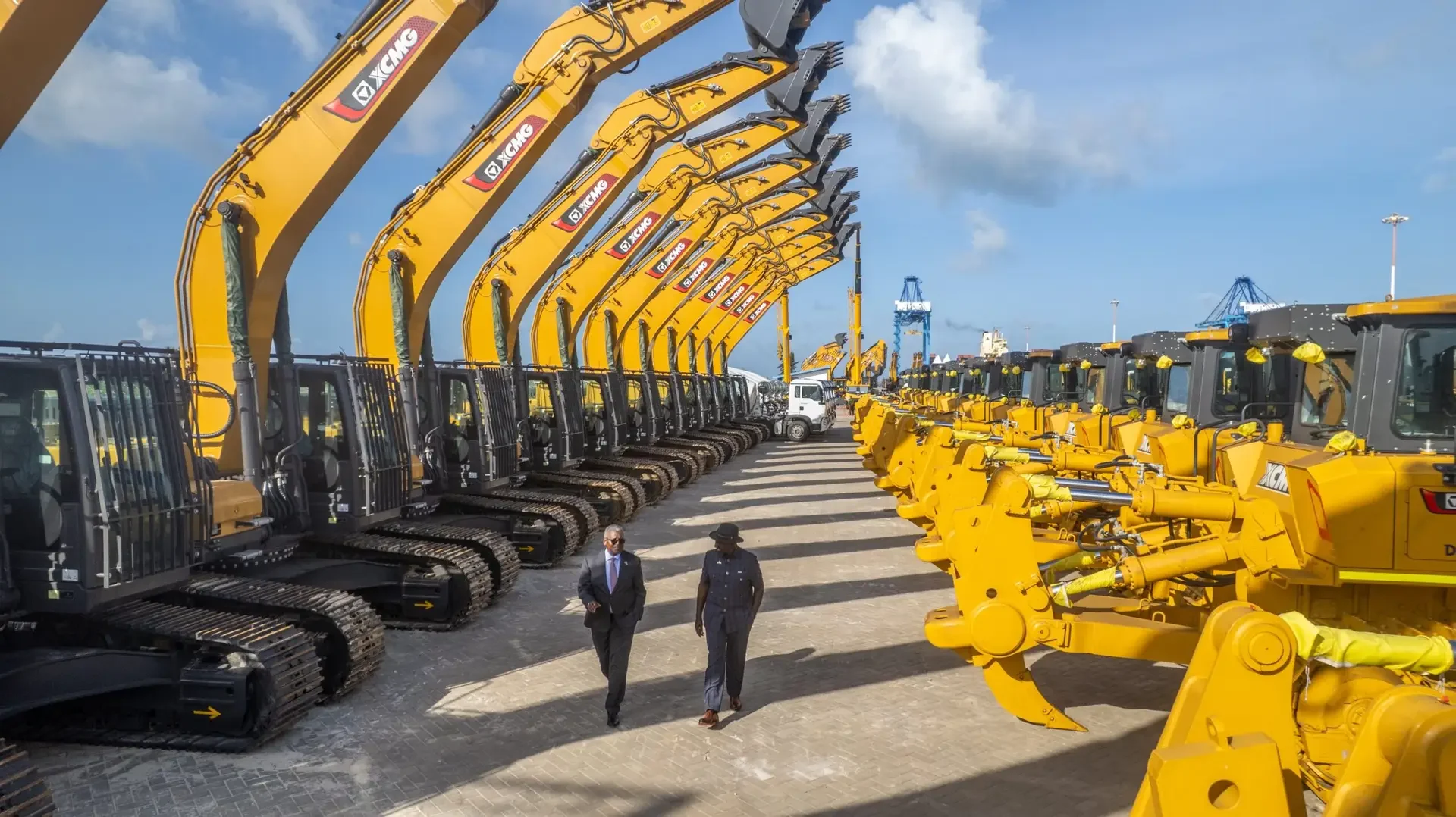
Aliko Dangote and President William Ruto have broken ground on a $16 billion, 700,000-barrel-per-day oil refinery in Lamu, Kenya, with completion targeted in 40 months
Nigerian billionaire Aliko Dangote has officially launched construction of a $16 billion oil refinery in Kenya’s Lamu County, marking the beginning of one of East Africa’s largest planned industrial projects.
Dangote, alongside President William Ruto and several African leaders, broke ground on the Dangote East Africa Petroleum Refinery at Mokowe, near Lamu Port, on Wednesday.
The refinery is designed to process 700,000 barrels of crude oil per day, with production expected to include petrol, diesel and jet fuel for Kenya and markets across East Africa. The project is scheduled for completion within 40 months, according to Dangote.
“We will come back and commission this refinery 40 months from today,” Dangote said during the groundbreaking ceremony.
A major investment in Kenya’s energy sector
The project, valued at approximately $16 billion, is expected to become one of Africa’s largest refining facilities and the biggest refinery project in East Africa.
The refinery will form part of a wider industrial complex that is planned to include a 1,000-megawatt power plant, alongside petrochemical and chemical manufacturing facilities. Dangote has also outlined plans for production of polypropylene and base oil.
The facility is expected to supply petroleum products to Kenya and neighbouring countries, potentially reducing East Africa’s dependence on imported refined fuel. Dangote has also indicated that the project could target international markets for aviation fuel.
Lamu positioned as an industrial and logistics hub
The refinery is being developed close to Lamu Port, a key component of the Lamu Port-South Sudan-Ethiopia Transport (LAPSSET) Corridor.
The Kenyan government says the investment could strengthen Lamu’s role as an energy, industrial and logistics hub while creating opportunities in construction, engineering, transport, manufacturing and other sectors.
More than 110 pieces of construction equipment are already on site, with about 400 additional pieces expected to arrive within 60 days, according to Kenya’s State Department for Transport.
Dangote also announced plans to establish an engineering training school in Lamu and train 1,000 local residents, creating a pipeline of skilled workers for the project and related industries.
Regional leaders attend groundbreaking
The ceremony brought together leaders from across Africa, underlining the project’s regional ambitions.
President Ruto was joined by Ugandan President Yoweri Museveni, Ethiopian Prime Minister Abiy Ahmed, Benin’s President Romuald Wadagni, Togo’s President Jean-Lucien Savi de Tové and former Nigerian President Olusegun Obasanjo, among other officials and representatives.
Dangote has positioned the refinery as part of a broader push for African countries to process more of their own raw materials instead of exporting crude and importing finished petroleum products.
The project is also expected to source crude from African producers, including Uganda, and serve markets extending beyond Kenya.
Project faces legal and environmental concerns
The groundbreaking comes amid a legal dispute over land earmarked for the refinery.
A group of 133 residents has challenged the project in court, citing ancestral land claims and concerns about compensation and environmental safeguards. A Kenyan court has ordered the parties to maintain the status quo on the disputed land pending further proceedings.
Environmental groups have also raised concerns about the potential impact of the development on the coastal ecosystem and the wider Lamu area, including the proximity to Lamu Old Town, a UNESCO World Heritage site.
Despite the challenges, Dangote and the Kenyan government proceeded with the official groundbreaking.
A new chapter for Kenya’s industrial ambitions
The launch places the Dangote refinery at the centre of Kenya’s plans to expand its industrial base and strengthen the strategic importance of the LAPSSET corridor.
If completed as planned, the facility would significantly expand East Africa’s petroleum-processing capacity and create a major new industrial complex on Kenya’s coast.
For Lamu, the project represents an attempt to transform the area from primarily a transport and port corridor into a broader energy, manufacturing and logistics hub serving Kenya and the wider East African market.
Construction is now expected to move from the groundbreaking stage into the main development phase, with Dangote targeting commissioning within 40 months.